How Call Center Agents Can Land Remote Customer Support Jobs That Pay in USD

Let me tell you something most people in your position don't realize.
You've been sitting in that call center — handling angry customers, hitting metrics, solving problems that would make most people hang up the phone — and you've been thinking that's just your life. That this is the ceiling.
It's not. That experience you've built? Remote companies in the US, UK, and Australia are actively looking for it. The problem was never your skills. The problem is nobody showed you the door.
Your call center background is worth more than you think
Here's what remote employers actually struggle to find — someone who can stay calm when a customer is furious, figure out a solution on the fly, and communicate clearly without someone standing over their shoulder. That's you. That's literally what you do every single day.
Most people applying for remote support roles have zero real experience dealing with pressure. You have years of it. That gap is your advantage, and you just haven't been packaging it the right way.
The kinds of roles you can actually go for
Remote customer support is the most obvious starting point — handling tickets, live chat, and emails for software companies or online stores. These roles pay anywhere from $12 to $22 an hour in USD, and most are fully remote.
If you want something with more flexibility, virtual assistant work is worth looking at. It's basically customer service mixed with admin — managing inboxes, scheduling, handling client communication. Entry-level starts around $8 to $15 an hour, but once you build a reputation, experienced VAs are making $20 to $35.
If your call center background is in internet or telecom support specifically, technical support roles at software companies are a natural move. The pay is usually higher — $15 to $28 an hour — because companies know that kind of troubleshooting experience is hard to find.
And here's one that most people overlook: Quality Analyst roles. You've probably been evaluated by QA your whole career. Flip it around. Your insider knowledge of what good support looks like is exactly what companies need when they're reviewing their own agents. These roles often pay more than frontline support and have far less emotional drain.
Where to actually find these jobs
Skip the generic job boards. These are the places where legitimate remote work actually gets posted:
Upwork and Fiverr are good if you want to freelance — you build a profile, offer your services, and clients come to you. FlexJobs is a paid platform but it's properly vetted, so you're not wading through scams. Remote.co has free listings across all industries. And LinkedIn is underrated — search "remote customer support," filter by worldwide location, and you'll find more than you expect.
The mistake that kills most applications
People take their existing CV — the one they wrote for their call center job — and send it off to remote companies unchanged. It doesn't work.
Remote employers read CVs differently. They're not just checking your experience. They're asking: can this person work without someone watching them? Do they understand how remote teams actually communicate? Do they get results or just show up?
So instead of writing "handled customer calls," write "resolved 80+ customer issues daily, maintaining a 95% satisfaction rating." Instead of "worked in a team," say "managed customer communication across email and live chat with no supervision." That kind of specificity tells a remote employer everything they need to know.
Not sure where to start?
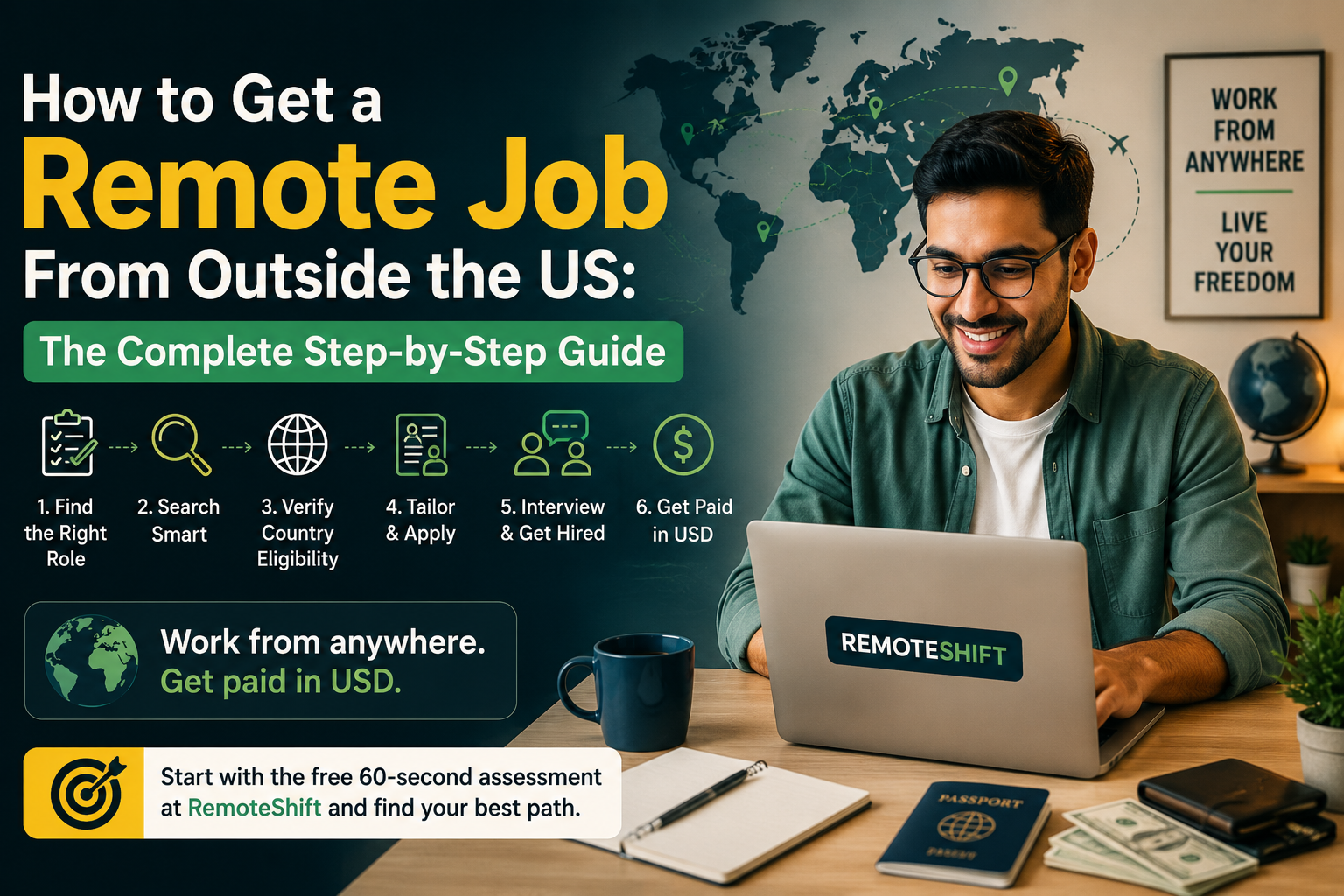
That's exactly why we built the free quiz at remoteshift.net. It takes about 90 seconds, looks at your actual background, and tells you which remote career path makes the most sense for you — along with the steps to get there. No fluff, no generic advice. Just a clear answer based on who you are and what you've already done.
You don't need a degree. You don't need to learn to code. You just need to stop undervaluing what you already have — and take the first step.
👉 Take the free career quiz at remoteshift.net