Receptionists, Read This: The Remote Jobs That Pay More for What You Already Do All Day

Let me describe your day, and you tell me if I'm close.
You get in before most people. You unlock the front, switch on the lights, and within ten minutes the phone is ringing, someone's at the desk needing something, and there's a delivery guy waiting for a signature. You're booking the meeting room, telling a visitor the manager is running late without making it sound like a problem, and somehow remembering that the guy from accounts takes his coffee black. By the time you sit down, you've already put out five small fires nobody else even noticed.
Here's what nobody ever told you: that's a skill. A real one. And companies on the other side of the world are paying good money for it right now.
That chaos you handle all day is worth money
I spent years watching people undervalue the work they did every single day, and receptionists are some of the worst at it. You think "I just answer phones and greet people." No. You manage chaos. You keep a hundred moving parts from colliding. You make strangers feel taken care of in under a minute. Those are the exact qualities a growing remote company is desperate for, and most of them can't find anyone who has them.
Where your front-desk skills actually fit online
The most obvious one is a remote virtual assistant or executive assistant role. Think about what an EA does — managing a calendar, handling email, booking travel, keeping a busy person organized and on time. You already do a slimmed-down version of that for everyone who walks through your door. The only difference is the office is now a laptop and the boss is in another country. These roles pay in USD, they're growing fast, and a lot of founders would rather hire someone with real front-desk experience than a fresh graduate who's never had to calm down an angry customer.
Then there's customer support and customer success. You're already the first face people see and the first voice they hear. Online, that becomes the first message a customer gets when something goes wrong. The companies that do this well know a warm, steady, organized person is worth their weight in gold, because one bad support experience and the customer is gone. You've been doing the in-person version of this for years.
There's also a quiet category people forget — scheduling and coordination roles. Medical practices, clinics, agencies, real estate teams. They all need someone remote to manage bookings, confirm appointments, chase no-shows, and keep the diary clean. That's front-desk work with the desk removed. Some of these are part-time to start, which is perfect if you're testing the water while you've still got a paycheck coming in.
The trap that holds receptionists back
You're going to look at remote job listings and the little voice in your head is going to say "but I don't have the right experience." That voice is lying to you. You have years of experience. You just have it under a job title that doesn't sound impressive on paper.
The fix isn't going back to school. The fix is learning to describe what you already do in the language remote companies use:
Front desk becomes "client-facing communication and scheduling"
Answering phones becomes "first-line support and query resolution"
Managing the diary becomes "calendar and appointment management"
Keeping visitors happy becomes "customer experience"
Same work. It just needed a translation.
The other thing I'll be straight with you about — you won't replace your salary in week one, and anyone promising that is selling you something. But the first remote gig, even a small one, changes everything. It proves the skills travel. It gives you something real to point to. And from there it builds faster than you'd think, because once you've done it once, the next client is far easier to land.
Stop scrolling job boards at midnight
What you don't want to do is keep scrolling at night, getting overwhelmed, and closing the laptop without doing anything. I did that for too long. The overwhelm isn't a sign you can't do it. It's a sign you're trying to figure out everything at once instead of figuring out the one path that actually fits you.
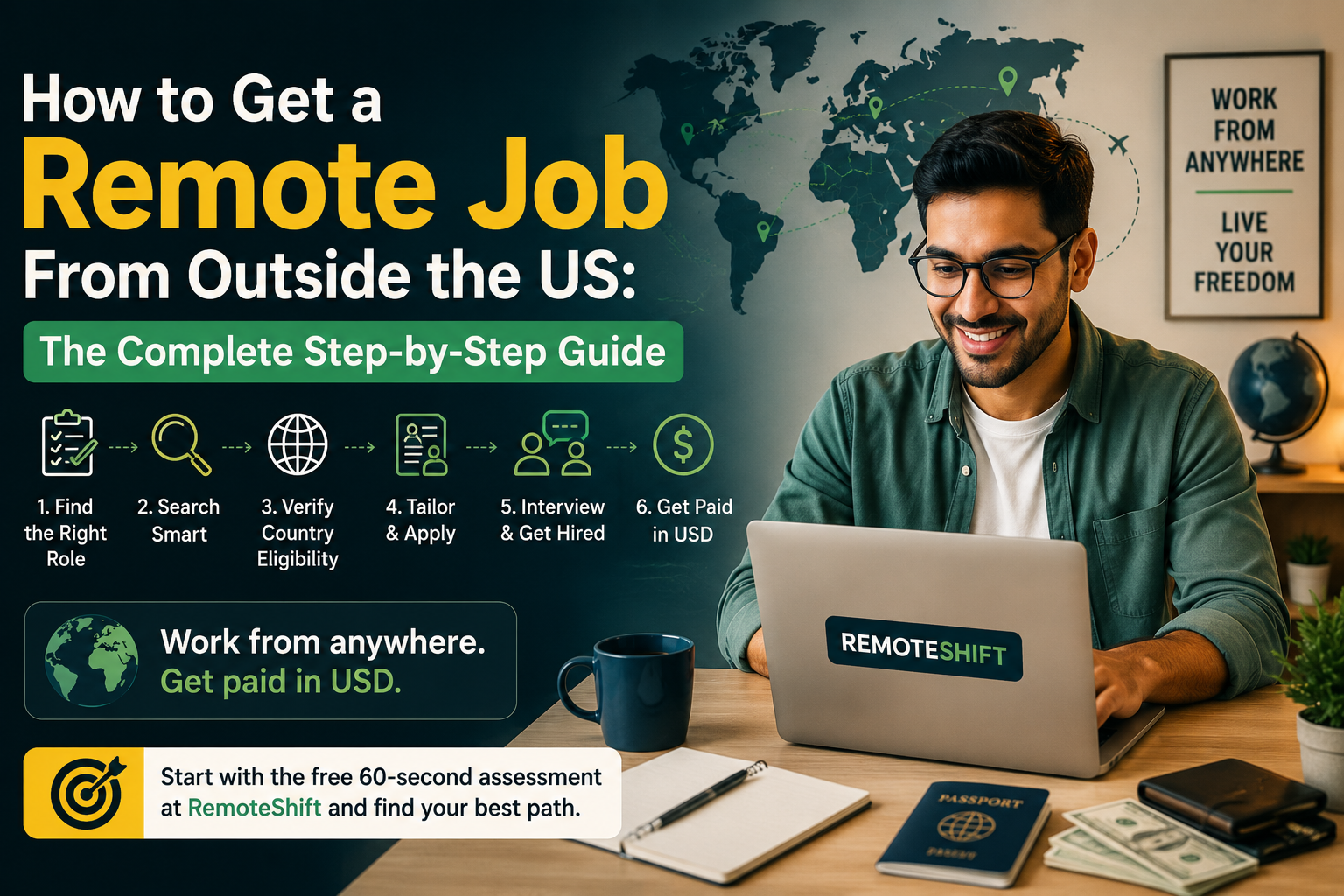
So let me make that part easy. I built a free quiz that takes about a minute. It asks you a few honest questions about how you work and what you're good at, then points you to the remote path that matches the skills you already have — instead of leaving you to guess. For someone with front-desk experience, it's genuinely worth a minute, because you'll probably be surprised which doors are already open to you. You can take it here. Do it before the doubt creeps back in.
You've spent years making everyone else's day run smoothly. It's time someone showed you how to do that for your own.