The Real Reason You Haven't Landed a Remote Job Yet (It's Not What You Think)

You've applied. Maybe more than once.
You spent time on the application, tweaked your CV, hit submit — and then nothing. Or worse, you got a rejection without even knowing what went wrong.
And now there's this quiet voice in the back of your head saying maybe remote work just isn't for you. Maybe you're not qualified enough. Maybe the competition is too strong.
I want to challenge that voice directly. Because in most cases, the reason people don't land remote jobs has nothing to do with their skills or their experience. It has everything to do with a few specific mistakes that are completely fixable once you know what they are.
Mistake #1 — You're applying for jobs the same way you applied for your call center job
This is the biggest one and almost everyone does it.
When you apply for a local job, your CV tells the employer where you worked, what your title was, and how long you stayed. That's enough because they can call your old boss, they understand the local job market, and they can meet you face to face to fill in the gaps.
Remote employers can't do any of that. They're reading hundreds of applications from people all over the world and they need your CV to tell the whole story on its own.
That means instead of writing "handled customer calls" you write "resolved an average of 80 customer issues daily across phone and email, maintaining a satisfaction rating above 95%." Instead of "worked in a team" you write "collaborated with a distributed team of 12 agents across two time zones using Slack and internal ticketing systems."
See the difference? One tells them what you did. The other tells them what you're capable of — and signals that you already understand how remote teams work.
Mistake #2 — Your application says nothing about working independently
This is the thing remote employers are most nervous about. Not your skills. Your ability to work without someone watching you.
Every remote job application you send needs to address this fear directly. Mention that you're self-directed. Talk about a time you managed your own workload without supervision. Tell them about your home setup — quiet space, reliable internet, dedicated work hours.
These details seem small. They're not. They're the difference between an application that gets read and one that gets skipped.
Mistake #3 — You're applying to too many jobs instead of the right ones
There's a version of job searching that feels productive but isn't. You apply to twenty jobs in an afternoon, copy-paste the same cover letter, and tell yourself you're working hard.
Remote hiring managers can smell a mass application. They've seen thousands of them. What actually works is applying to ten jobs with applications that feel personal and specific — where you've clearly read the job description, you understand what the company does, and your application speaks directly to their actual problem.
Quality over quantity. Every time.
Mistake #4 — You're not building any visibility online
Here's something most people don't consider. The remote job market isn't just about applying. It's about being findable.
A LinkedIn profile that clearly says "experienced customer service professional open to remote opportunities" with specific skills listed does quiet work for you while you sleep. Recruiters search for candidates. If your profile is invisible or generic, you're not in the running even when there's a perfect role.
This doesn't have to be complicated. Update your headline. List your actual skills. Add a short paragraph about what you do and what you're looking for. That alone puts you ahead of most people.
Mistake #5 — You're going after the wrong roles for your starting point
Not all remote jobs are equally accessible to someone starting out. Senior roles, management positions, highly specialized technical jobs — those come later. Right now the goal is to get your first remote role, build your reputation, collect some reviews or references, and use that as a springboard.
The best starting points for someone with a customer service background are remote support agent roles, virtual assistant positions, and data annotation work. These are the roles where your existing skills are enough to get you in the door — and from there, every door opens wider.
So where do you actually start?
The honest answer is — it depends on your specific background. And that's not a cop-out. It's the truth. The right starting point for someone with five years of telecom support experience looks completely different from someone who spent three years as a receptionist or two years doing inbound sales.
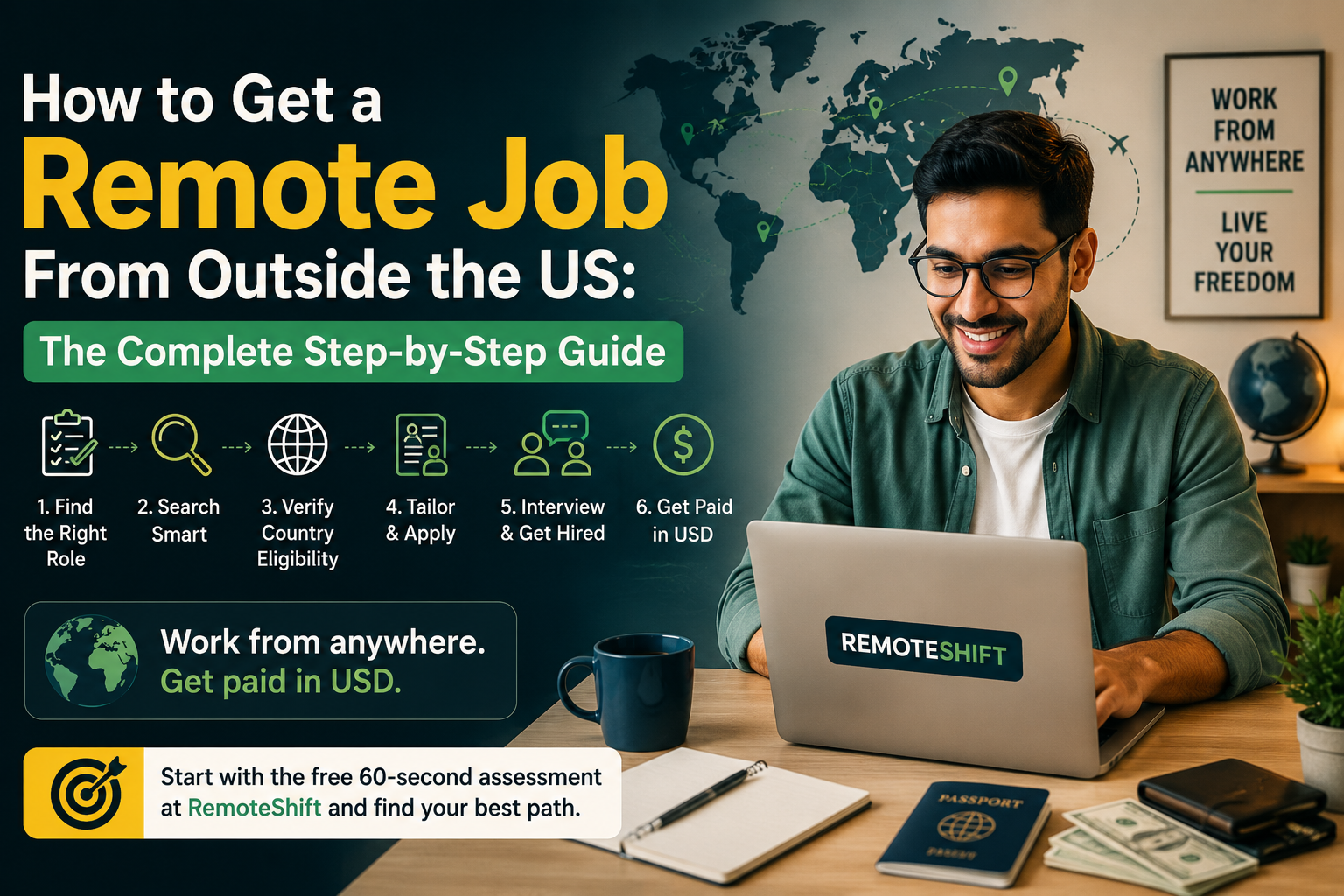
That's why we built the quiz at RemoteShift. It takes your actual background and tells you specifically which remote path fits you best right now — not eventually, not after three courses — right now, with what you already have.
It takes 90 seconds. And unlike most of the advice floating around online, it doesn't try to sell you anything afterward.
👉 Find your remote career path at remoteshift.net
If you've been stuck in the application cycle feeling like you're doing everything right but getting nowhere — share this with someone else who's in the same place. Sometimes the missing piece is just knowing what you were doing wrong. And now you do.
We'll see you next week with another guide. Subscribe so you don't miss it.